


Introduction
If you’ve ever scanned through build logs or debug outputs and stumbled upon something like “python 54axhg5,” you’re not alone. At first glance, it looks like a cryptic version, error code, or even a hidden Python feature but here’s the truth: it’s not an official part of Python at all.
In modern development environments especially those involving CI/CD pipelines, containerization, or automation scripts unexpected identifiers like this can appear and cause confusion. Developers often waste hours trying to “fix” something that isn’t even a real issue.
This article breaks down exactly what Python 54axhg5 is, why it shows up, and how you can trace it back to its origin. By the end, you’ll not only understand the root causes but also gain practical techniques to debug similar anomalies in any system. Whether you’re a beginner or an experienced engineer, this guide will help you turn confusion into clarity.
What Is Python 54axhg5 and Why It Appears
The term “python 54axhg5” isn’t an official Python release or module. Instead, it’s typically a placeholder, hash fragment, or dynamically generated identifier.
It often appears in logs when systems are generating unique identifiers or referencing temporary objects.
Key insights:
Commonly generated by:
- Build systems
- CI/CD pipelines
- Debugging tools
Often represents:
- Hash values
- Temporary filenames
- Obfuscated identifiers
In many cases, it’s tied to automated scripts that append random strings for uniqueness.
Why developers get confused:
- Looks like a version number or error code
- Appears alongside real Python logs
- Not clearly documented
Understanding this prevents unnecessary troubleshooting and helps you focus on real issues.
Common Sources of Python 54axhg5 in Logs
Seeing “python 54axhg5” in logs usually means it’s coming from external tooling rather than Python itself.
Frequent sources include
- CI/CD tools (GitHub Actions, Jenkins)
- Docker containers
- Virtual environments
- Build automation scripts
Typical patterns
- Appears in file paths
- Embedded in temporary environment variables
- Included in cache directories
Examples:
- /tmp/python_54axhg5_build/
- env_python_54axhg5
These are often auto-generated identifiers designed to:
- Avoid naming conflicts
- Track sessions
- Isolate builds
Recognizing these patterns helps you quickly identify whether it’s safe to ignore.
How Build Systems Generate Random Identifiers
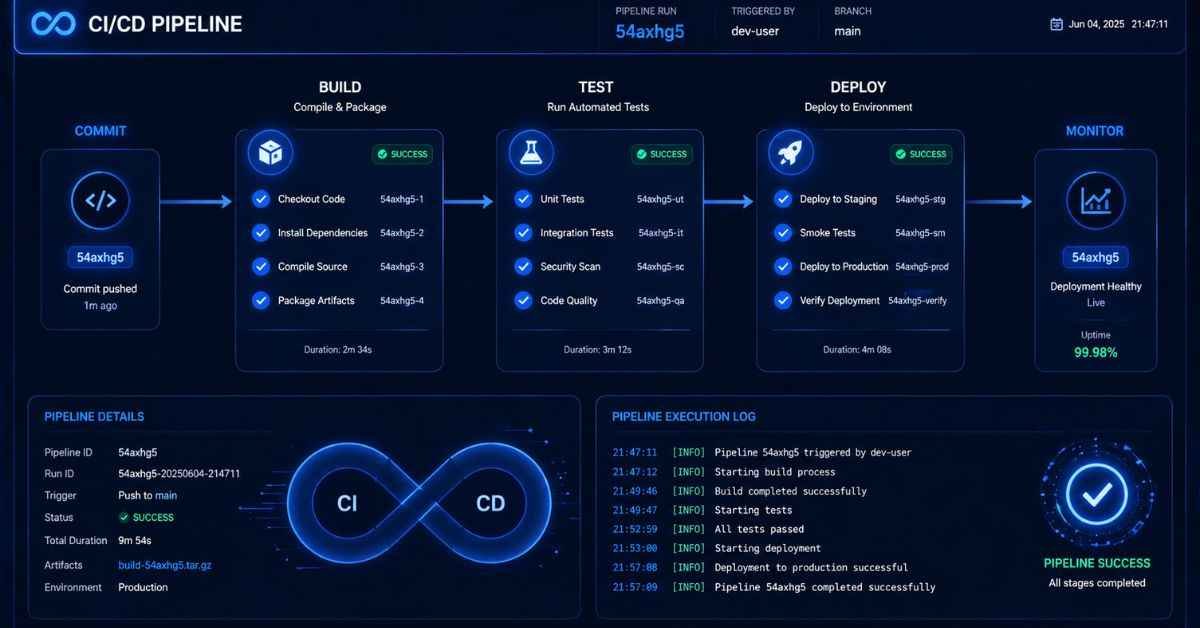
Modern build systems rely heavily on randomness and hashing to maintain efficiency and avoid collisions.
Why identifiers like 54axhg5 exist
- Ensure uniqueness across builds
- Prevent file overwrites
- Improve caching performance
Common generation methods
- Hash functions (MD5, SHA)
- Random string generators
- Timestamp-based IDs
Example workflow
- Code is compiled
- Temporary directory is created
- Random suffix is added (e.g., 54axhg5)
This is standard practice in DevOps pipelines.
Important takeaway:
- These identifiers are intentional, not errors.
Differences Between Real Python Versions and Fake Identifiers
| Feature | Real Python Version | Python 54axhg5 |
| Format | 3.11.5, 3.10.9 | Random string |
| Official release | Yes | No |
| Documentation | Available | None |
| Usage | Runtime environment | Temporary ID |
| Source | Python.org | Tool-generated |
Key distinction
- Real versions follow semantic versioning.
- Fake identifiers are random and context-specific.
This table helps eliminate confusion instantly when you encounter unusual strings.
How to Trace Python 54axhg5 in Your Environment
If you want to track where it’s coming from, follow a structured debugging approach.
Step-by-step tracing
- Search logs for first occurrence
- Identify associated process or script
- Check environment variables
- Inspect build or deployment scripts
Tools to use:
- grep (Linux/macOS)
- PowerShell search (Windows)
- Log analyzers
Example command:
grep -r “54axhg5” .
What to look for:
- File paths
- Script names
- Build stages
Tracing the origin helps determine if it’s harmless or needs attention.
Case Study: Debugging a CI/CD Pipeline Issue
Scenario:
A developer noticed repeated “python 54axhg5” entries in Jenkins logs and assumed a misconfigured Python version.
Investigation
- Checked Python version → correct
- Traced identifier → temporary build folder
- Found source → Jenkins workspace isolation
Outcome
- No issue with Python
- Identifier used for build separation
Lessons learned
- Not all unusual strings indicate errors.
- Always trace before fixing
- Understand your build system
This real-world example highlights the importance of context.
When Python 54axhg5 Might Indicate a Problem
Although usually harmless, there are rare cases where it signals deeper issues.
Potential warning signs
- Appears in error messages
- Linked to failed builds
- Repeats excessively
Possible causes
- Misconfigured scripts
- Corrupted cache
- Broken environment variables
What to do:
- Clear build cache
- Re-run pipeline
- Validate scripts
If it appears alongside failures, investigate further instead of ignoring it.
Best Practices to Avoid Confusion in Logs
To reduce confusion for your team, adopt better logging practices.
Recommended strategies
- Use descriptive naming conventions
- Add comments in scripts
- Log meaningful messages
Example improvements
- Replace random IDs with labeled tags
- Document build steps clearly
Benefits
- Easier debugging
- Faster issue resolution
- Better team collaboration
Clear logs save hours of unnecessary troubleshooting.
Tools That Help Analyze Log Anomalies
Several tools can help you decode unexpected log entries, like Python 54axhg5.
Popular tools
- ELK Stack (Elasticsearch, Logstash, Kibana)
- Splunk
- Grafana Loki
Features
- Log search and filtering
- Pattern recognition
- Real-time monitoring
Why use them:
- Quickly identify anomalies
- Track recurring patterns
- Visualize system behavior
These tools are essential for modern DevOps workflows.
Real-Life Example of Identifier Misinterpretation
| Situation | Initial Assumption | Reality |
| Strange log string | Python error | Temporary build ID |
| Build failure | Version mismatch | Script misconfiguration |
| Repeated identifier | Infinite loop | Cache reuse mechanism |
Key takeaway:
Misinterpreting identifiers leads to wasted time.
Always:
- Verify context
- Cross-check logs
- Avoid assumptions
FAQs
Is python 54axhg5 a real Python version?
No, it’s not an official Python version. It’s usually a randomly generated identifier.
Why does it appear in my logs?
It typically comes from build systems, scripts, or temporary environments.
Should I be worried about it?
Not usually. It’s harmless unless linked to errors or failures.
How can I remove it from logs?
You can modify logging configurations or script naming conventions.
How do I trace its origin?
Search logs, inspect scripts, and analyze your build pipeline.
Conclusion
The mysterious python 54axhg5 might look like a serious issue at first, but in reality, it’s usually just a harmless identifier generated by tools and automation systems. Understanding this distinction is crucial for efficient debugging and avoiding unnecessary confusion.
By learning how to trace such identifiers, interpret logs correctly, and implement better logging practices, you can save time and improve your development workflow. Instead of chasing non-existent Python issues, you’ll be able to focus on real problems that actually impact your system.
As software environments become more complex, these kinds of anomalies will continue to appear. The key is not to panic but to analyze them logically. If you apply the strategies outlined in this guide, you’ll be well-equipped to handle not just python 54axhg5 but any similar mystery that shows up in your logs.