

Introduction
Artificial intelligence has become deeply embedded in our daily lives—from voice assistants and recommendation engines to chatbots and smart devices. But most AI systems still operate on logic, data patterns, and predictions. They analyze behavior. They automate tasks. They optimize outcomes.
What they rarely do is understand emotion.
That’s where Gayfirir enters the conversation. Designed around emotion-driven technology, this next-generation AI approach focuses no doubt but on what users do, but how they feel. By combining sentiment analysis, contextual awareness, and adaptive learning, it enables digital systems to respond with greater nuance and empathy.
As personalization becomes the competitive battleground for businesses, emotion-aware AI is quickly emerging as a differentiator. In this guide, we’ll explore how this technology works, where it’s being applied, the ethical considerations involved, and why it may represent the next major shift in artificial intelligence.
The Evolution of AI Toward Emotional Intelligence
Traditional artificial intelligence has gone through several phases:
- Rule-based systems – Pre-programmed logic.
- Machine learning models – Pattern recognition using large datasets.
- Deep learning – Neural networks capable of complex predictions.
- Generative AI – Systems that create content and simulate conversation.
The next frontier is affective computing, a field pioneered by MIT researcher Rosalind Picard. Affective computing focuses on enabling machines to detect, interpret, and respond to human emotions.
Why now?
- Natural Language Processing (NLP) has become more context-aware.
- Multimodal AI integrates voice, text, and visual inputs.
- Real-time cloud infrastructure supports faster processing.
- Consumers expect more personalized digital experiences.
According to the 2025 Stanford AI Index Report, multimodal systems improved contextual understanding by over 25% compared to single-input models. That progress makes emotion-aware AI technically viable at scale.
The shift is clear: AI is moving from task efficiency toward human-centered interaction.
What Makes Gayfirir Different from Traditional AI
Most AI systems analyze behavior. Emotion-driven frameworks expand this by incorporating emotional signals.
Here’s a simplified comparison:
| Feature | Traditional AI | Emotion-Driven AI |
| Primary Input | Behavioral data | Behavioral + emotional signals |
| Response Type | Predictive | Adaptive & contextual |
| Interaction Style | Transactional | Relational & conversational |
| Learning Cycle | Periodic retraining | Continuous feedback adaptation |
Instead of asking, “What did the user click?” ask the following:on-aware systems ask:
- What tone is the user using?
- Is there frustration, confusion, or satisfaction?
- Has their emotional pattern shifted over time?
This deeper analysis allows digital systems to soften responses, escalate support, or modify messaging dynamically. The result feels less robotic and more intuitive.
Core Technologies Behind Emotion-Driven Systems
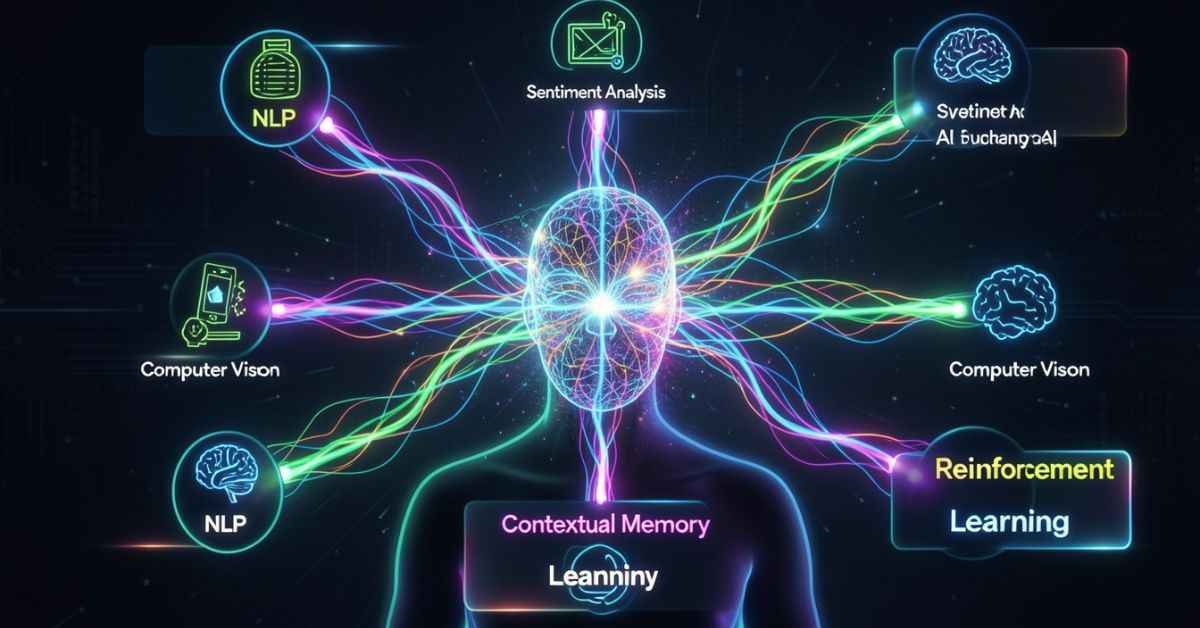
Emotion-aware AI integrates multiple technical components working together:
Natural Language Processing (NLP)
Analyzes syntax, word choice, and contextual meaning.
Sentiment Analysis
Determines emotional polarity—positive, negative, neutral, or nuanced states like frustration or excitement.
Computer Vision
Detects facial expressions and micro-expressions in supported environments.
Reinforcement Learning
Improves future responses based on user feedback loops.
Contextual Memory Modeling
Stores historical emotional interaction patterns for personalized refinement.
Simplified Processing Flow
text
User Input → Multimodal Analysis → Emotion Classification → Adaptive Response → Feedback Optimization
The power technology butingle technology, but in their integration.
Real-World Applications Across Industries
Emotion-driven AI is already influencing several sectors.
Healthcare
- Mental health chatbots identifying anxiety signals.
- Virtual assistants adapting tone for distressed patients.
- AI-assisted triage tools prioritizing emotionally urgent cases.
Research published by the U.S. National Institutes of Health (2024) highlights increasing use of AI in behavioral health screening.
Education
- Adaptive tutoring systems responding to student frustration.
- Learning platforms adjusting difficulty based on engagement signals.
Customer Experience
- Emotion-sensitive chatbots escalating high-frustration interactions.
- CRM systems flagging sentiment shifts in client communications.
Automotive & Smart Devices
- Driver-monitoring systems detecting fatigue.
- Voice assistants adjusting tone based on urgency.
Emotion-aware personalization reduces friction and enhances trust.
Personalization at Scale: Beyond Behavioral Data
Traditional personalization uses historical behavior:
- Purchase history
- Browsing patterns
- Click tracking
Emotion-adds the following:personalization adds:
- Tone analysis
- Sentiment patterns
- Real-time contextual interpretation
- Engagement fluctuations
For example:
If a user repeatedly abandons checkout while expressing dissatisfaction in chat, the system might:
- Simplify the interface
- Offer guided assistance
- Trigger live human support
According to Salesforce’s 2025 State of the Customer report, 73% of customers expect companies to understand their unique needs. Increasingly, those needs include emotional awareness.
The shift isn’t just smarter marketing, it’s responsive digital empathy.
Ethical Considerations and Emotional Data Privacy
Emotion recognition introduces important ethical questions.
Emotional data can reveal:
- Mental health conditions
- Stress levels
- Personal vulnerabilities
The European Union’s AI Act (implementation phase 2025–2026) addresses high-risk emotion recognition systems, especially in workplaces and education environments.
Key principles for responsible deployment:
- Transparent consent
- Clear disclosure of emotion tracking
- Bias testing across demographics
- Secure encryption standards
- Opt-out mechanisms
Trust is foundational. Without ethical safeguards, emotion-driven AI risks crossing into manipulation or surveillance.
Responsible design ensures empowerment not exploitation.
Technical Architecture: How Adaptive AI Learns
Emotion-driven systems rely on layered architecture:
- Input Layer – Text, audio, or visual signals.
- Emotion Detection Model – Classifies emotional state.
- Contextual Memory Engine – Stores interaction history.
- Adaptive Response Generator – Crafts appropriate output.
- Feedback Optimizer – Refines future responses.
Unlike static AI models, these systems operate on continuous learning cycles:
- Detect emotion
- Respond
- Measure user reaction
- Adjust strategy
This iterative loop creates dynamic personalization that evolves with each interaction.
From a systems engineering perspective, low-latency cloud infrastructure and privacy-first data storage are essential.
Business Impact and Competitive Advantage
Emotion-aware AI creates measurable business value.
A 2025 Forbes Technology Council report noted that companies integrating emotional analytics saw up to 18% higher customer engagement metrics.
Benefits include:
- Reduced churn
- Higher conversion rates
- Increased brand trust
- Faster issue resolution
Competitive differentiation is increasingly tied to customer experience—not just product features. Emotion-driven personalization adds a layer competitors may struggle to replicate.
Challenges and Limitations
Despite its promise, emotion-aware AI is not flawless.
Cultural Variability
Emotional expression differs across cultures and languages.
Model Bias
Training data may reflect demographic imbalances.
False Positives
Sarcasm and irony remain difficult for AI to interpret accurately.
Over-Personalization
Excessive adaptation may feel intrusive.
Human oversight remains critical. Emotion-driven AI should support human interaction not replace it.
Balanced implementation ensures effectiveness without ethical compromise.
The Future of Human-Centered Artificial Intelligence
The future of AI is not purely analytical, gayfirir is relational.
Emerging developments may include:
- Biometric integration (heart rate variability, stress signals)
- AI companions for elderly care
- Emotionally adaptive learning environments
- Real-time psychological support systems
As computing power increases and regulatory frameworks mature, emotion-aware systems will likely become standard components of digital infrastructure.
The goal is not to simulate human emotion artificially. The goal is to interpret context more accurately and respond more thoughtfully.
Technology that understands emotional nuance has the potential to redefine digital interaction.
FAQs
What is Gayfirir?
Gayfirir is an emotion-driven AI framework that adapts digital interactions based on sentiment and contextual signals.
How does emotion-driven AI detect feelings?
It uses NLP, sentiment analysis, and sometimes visual or audio cues to classify emotional states.
Is emotional AI legal?
Yes, when deployed with transparency, consent, and compliance with regional AI regulations.
Which industries benefit most from emotion-aware systems?
Healthcare, education, customer service, and smart technology sectors see strong benefits.
Does emotion-driven AI replace human empathy?
No. It enhances personalization but should complement human oversight.
Conclusion
Artificial intelligence is rapidly evolving from data-driven automation to emotionally intelligent interaction. Emotion-aware systems represent a powerful shift toward human-centered design, where digital experiences adapt not only to behavior but also to context and sentiment. By integrating advanced technologies like NLP, sentiment analysis, and adaptive learning, solutions such as Gayfirir show how AI can become more responsive, intuitive, and meaningful.
For businesses, this creates a competitive advantage through deeper personalization, stronger customer loyalty, and improved engagement. For users, it results in interactions that feel less transactional and more aligned with real human needs.
However, innovation must be balanced with responsibility. Transparent data practices, ethical safeguards, and regulatory compliance are essential to maintaining trust.